0
Skip to Content
Serenity Somatic Practice
Home
Psychotherapy
Life Coaching
What is...
Resources
Contact
Embodied Musings Blog
Serenity Somatic Practice
Home
Psychotherapy
Life Coaching
What is...
Resources
Contact
Embodied Musings Blog
Home
Psychotherapy
Life Coaching
What is...
Resources
Contact
Embodied Musings Blog

Neurodivergence Resources

book | Different Planets: Understanding Your Neurodiverse Relationship

video | Paul - Autism from the Inside | Are You Autistic? 25 Questions To Ask Yourself!

video | Yo Samdy Sam | The Autism Spectrum: Explained

video | Jessica - How to ADHD | What is ADHD?

video | Jessica - How to ADHD | How to Know if You Have ADHD

video | ADHD vs CPTSD | Adult ADHD and Childhood Trauma

article | Different Types Of Empathy

book | Autistic Survival Guide to Therapy

video | How therapy can traumatise autistic people (w/ Steph Jones)

article | Autism and Burnout | You Might Not Recover from Burnout. Ever.

article | PMS and ADHD | PMS and ADHD: How the Menstrual Cycle Intensifies Symptoms

article | Selective Mutism in Adults | How Selective Mutism Affects Adults

article | Autistic Shutdowns in Adults | Autistic Shutdowns: A Guide for Neurodivergent Adults

article | Neurodivergent Window of Tolerance | The Window of Tolerance and Neurodivergence
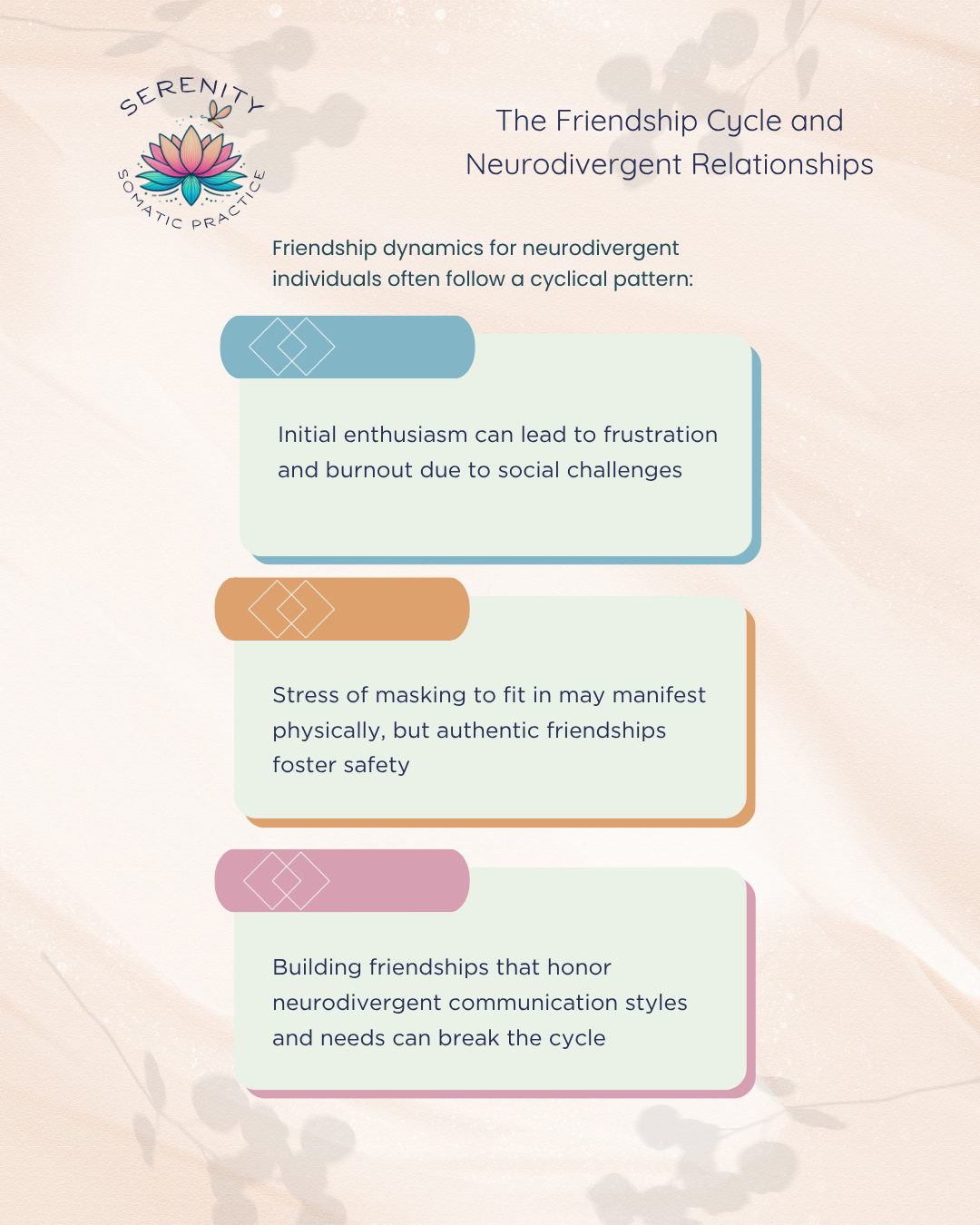
An infographic titled "The Friendship Cycle and Neurodivergent Relationships" with a logo of a lotus flower and the word "Serenity". It describes a cyclical pattern in friendship dynamics for neurodivergent individuals, with three stages: 1) Initial enthusiasm can lead to frustration and burnout due to social challenges, 2) Stress of masking to fit in may manifest physically, but authentic friendships foster safety, and 3) Building friendships that honor neurodivergent communication styles and needs can break the cycle.
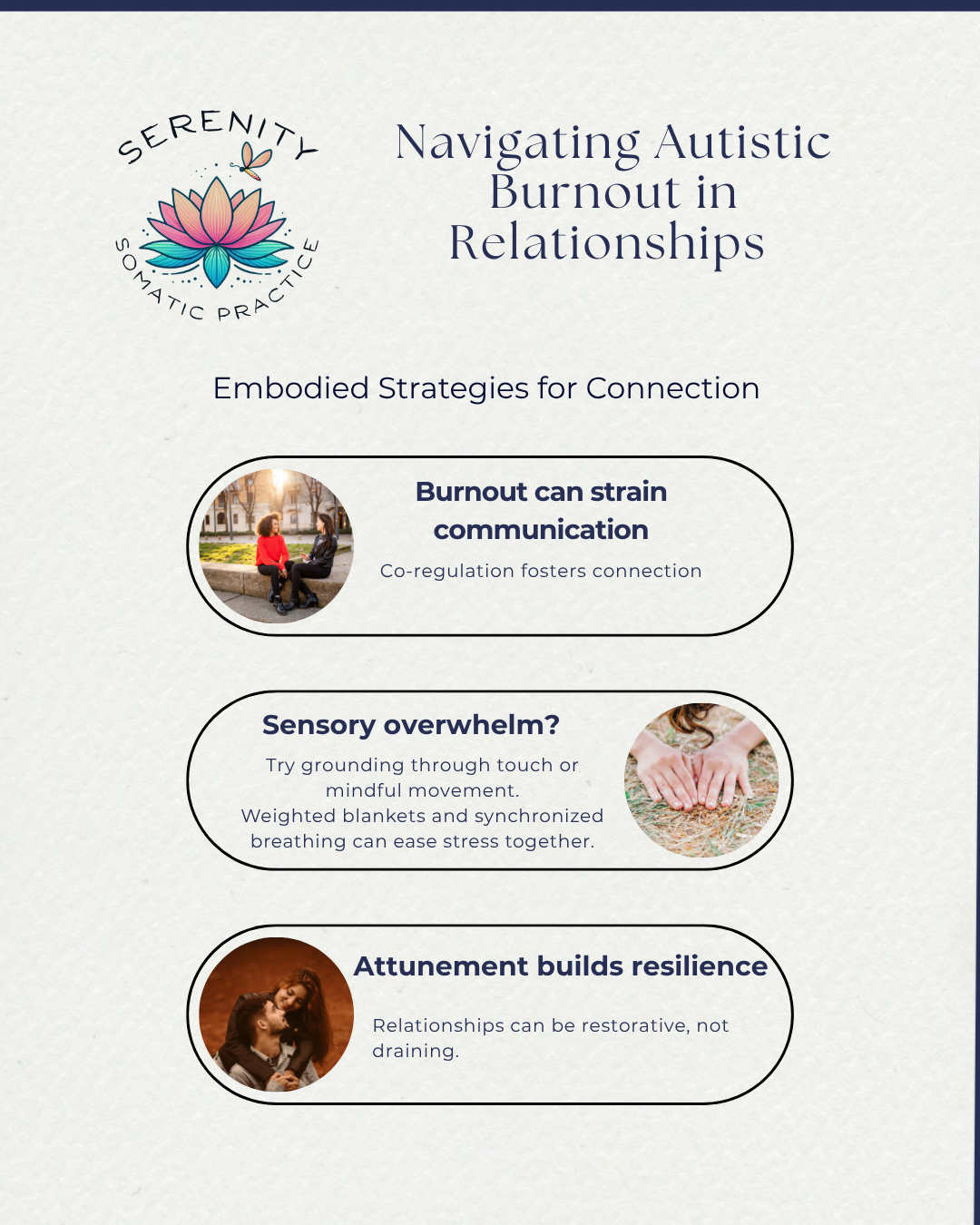
Informational graphic titled 'Navigating Autistic Burnout in Relationships' with three sections: 'Burnout can strain communication' showing a photo of two women talking in a park; 'Sensory overwhelm?' with an image of hands touching grass; and 'Attunement builds resilience' with a photo of two women embracing.
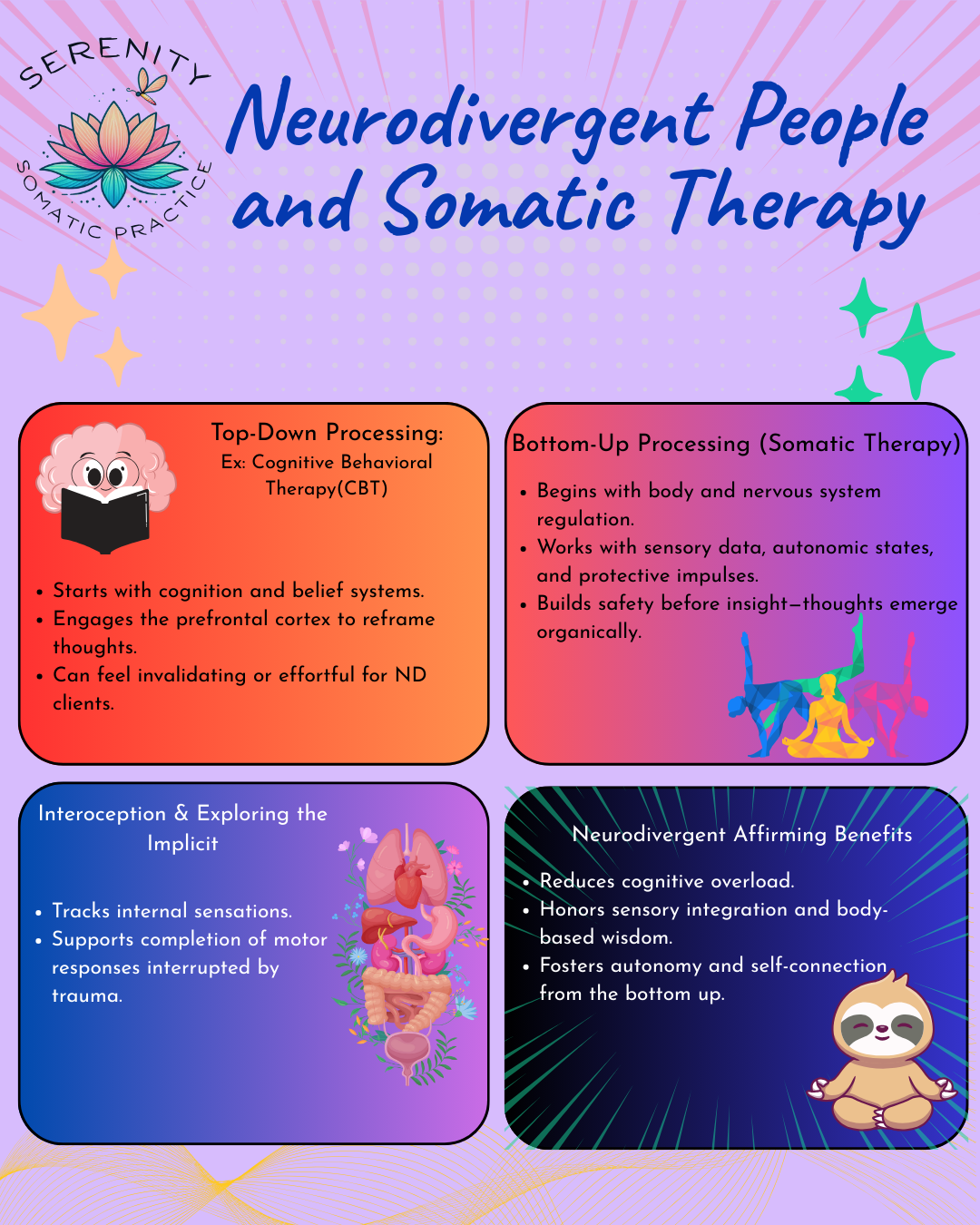
An infographic about neurodivergent people and somatic therapy, divided into four sections with colorful illustrations and text: Top-Down Processing, Bottom-Up Processing, Interoception & Exploring the Implicit, and Neurodivergent Affirming Benefits. The background is lavender with star and sparkle graphics.
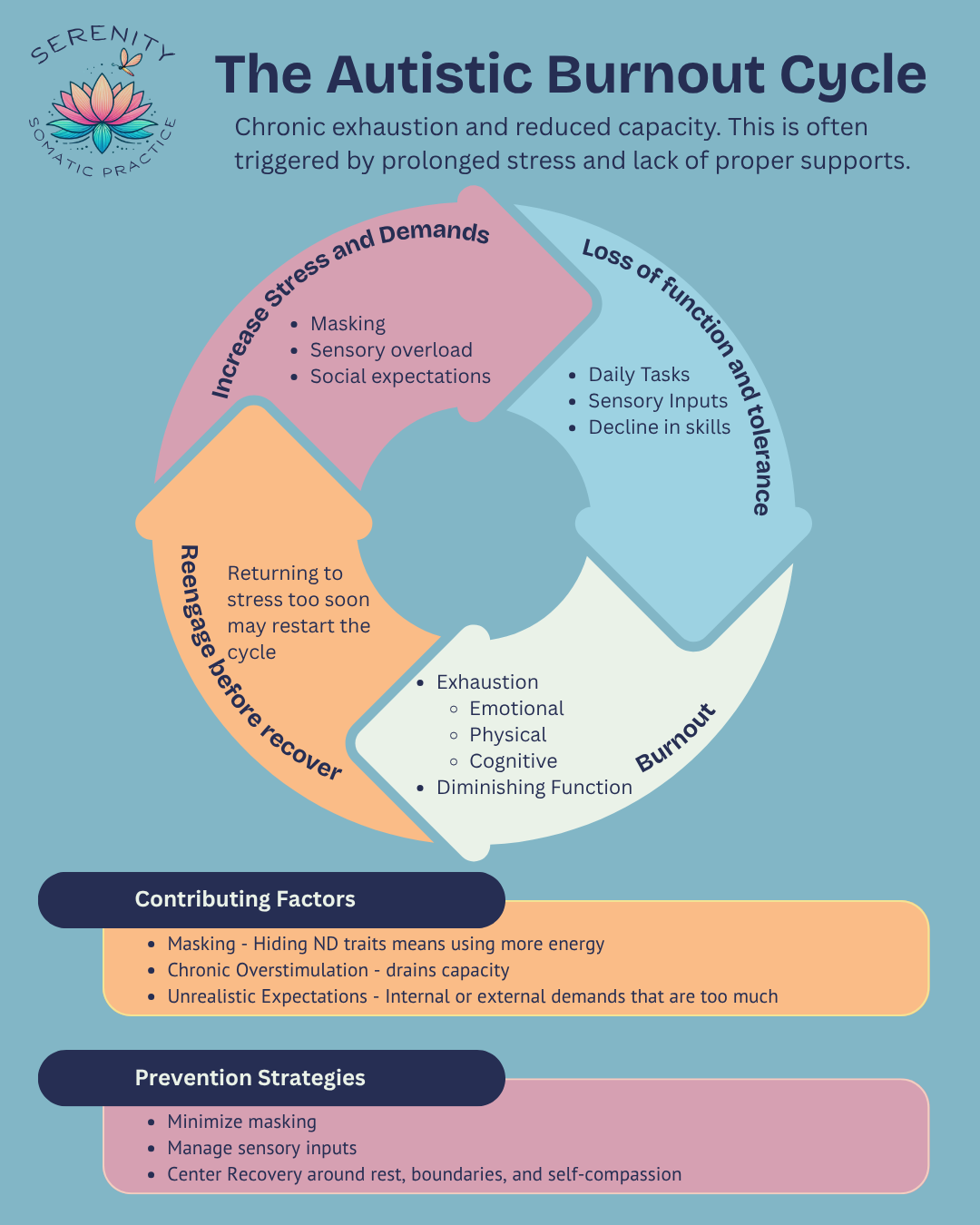
Infographic titled "The Autistic Burnout Cycle" showing a circular diagram with four sections illustrating the cycle of autistic burnout. The sections are labeled: "Loss of function and tolerance" with points on daily tasks, sensory inputs, decline in skills; "Burnout" with exhaustion marked by emotional, physical, and cognitive fatigue and diminishing function; "Reengage before recover" with returning to stress too soon possibly restarting the cycle; "Increase stress and Demands" with masking, sensory overload, social expectations. The infographic includes contributing factors of masking, chronic over-stimulation, and unrealistic expectations, and prevention strategies such as minimizing masking, managing sensory inputs, and self-compassion.
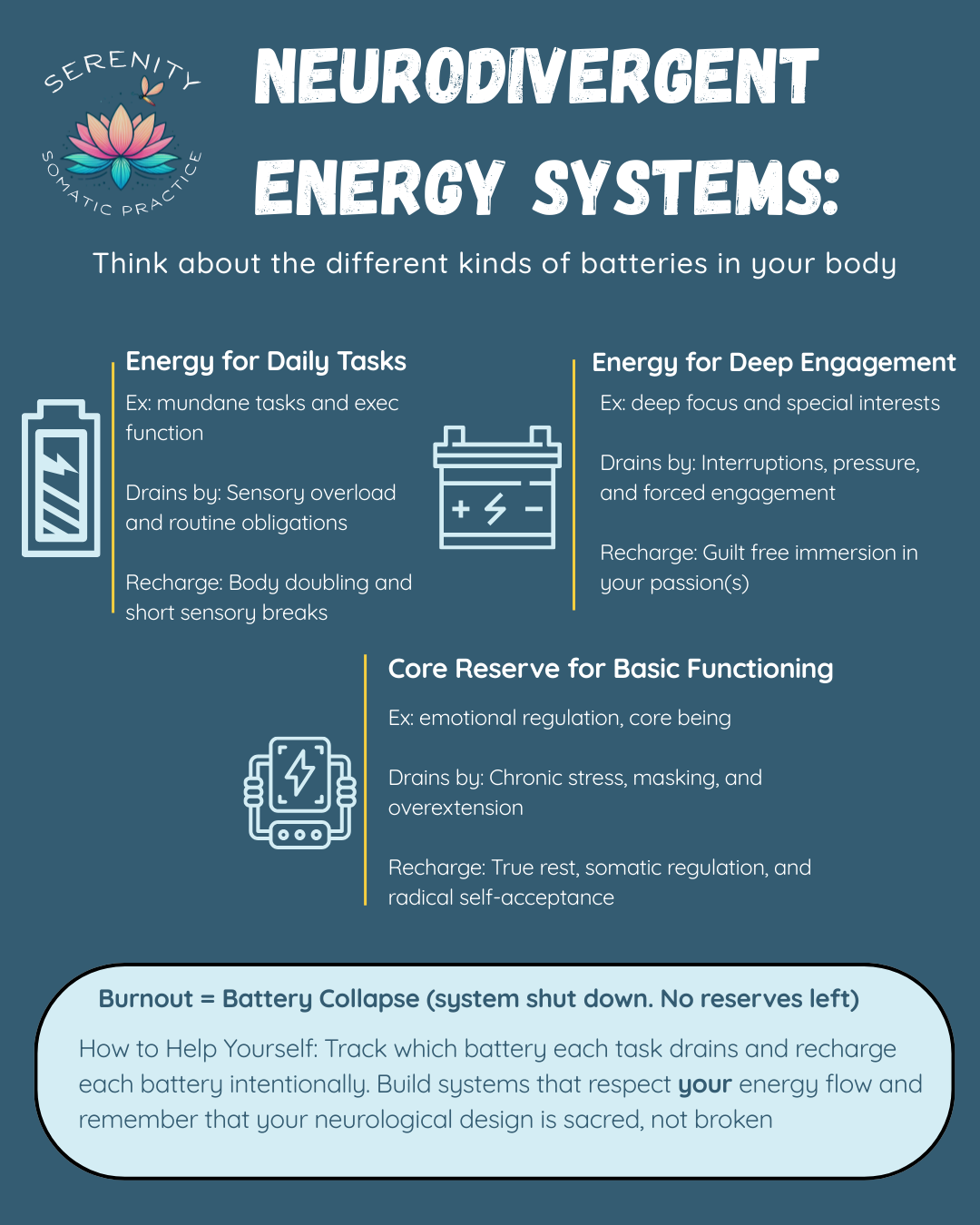
An infographic about neurodivergent energy systems, illustrating three types: energy for daily tasks, energy for deep engagement, and core reserve for basic functioning, with tips on managing burnout and respecting neurological health.
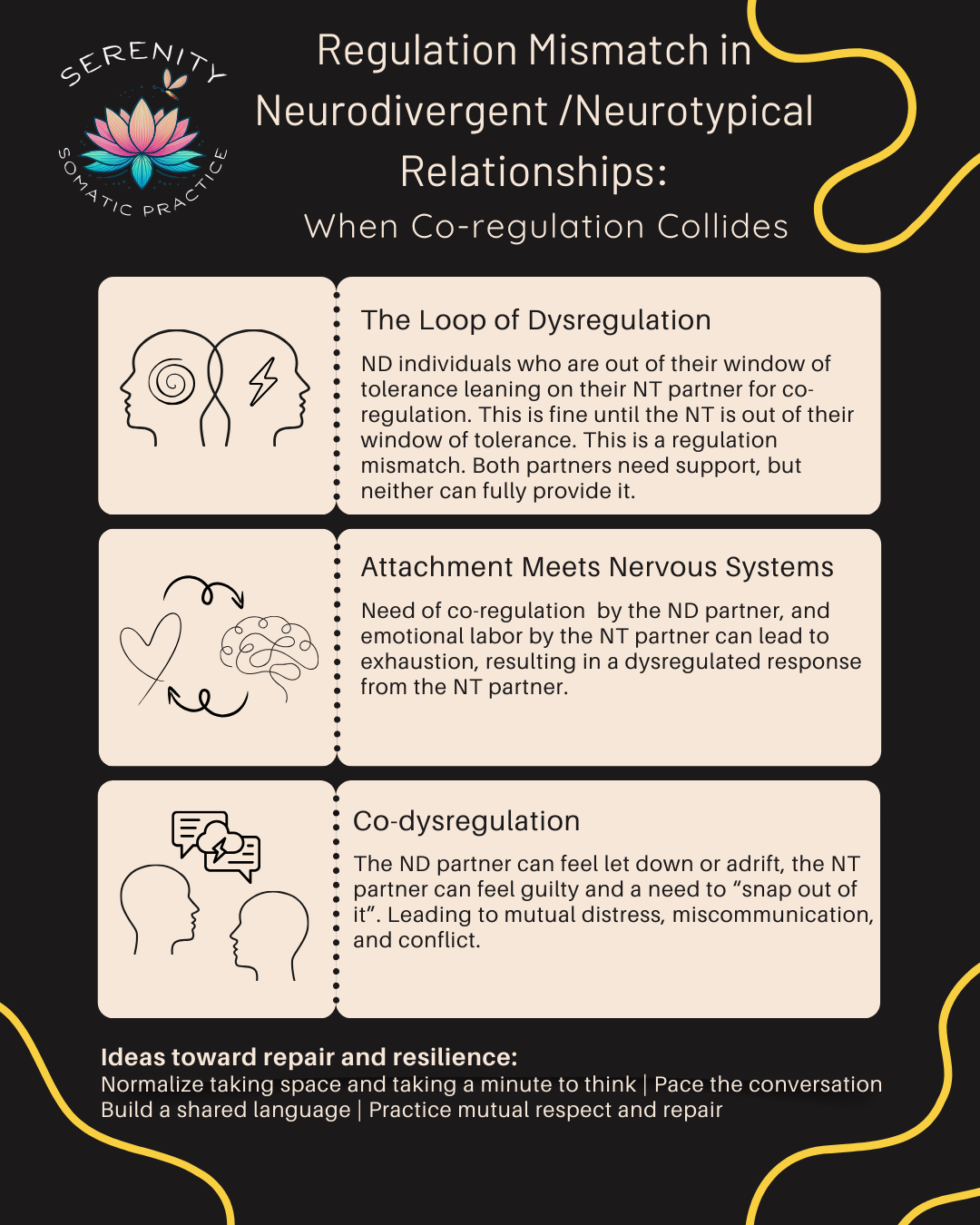
Infographic titled "Regulation Mismatch in Neurodivergent/Neurotypical Relationships" with a logo of a lotus flower and the words "Serenity Somatic Practice." It contains three sections: The Loop of Dysregulation, Attachment Meets Nervous Systems, and Co-dysregulation, each with simple line art icons and explanatory text about neurodivergent and neurotypical partner dynamics.

Serenity Somatic Practice

970.818.8537

houghtonsomatictherapy@gmail.com